Sciatica and leg pain
We are committed to helping you understand what is causing your discomfort or pain
Leg pain can range from mild discomfort to sharp, debilitating pain and may affect the muscles, joints, or nerves. Common symptoms include aching, stiffness, cramping, or tingling sensations. Causes vary and can include repetitive movements, injury, or conditions like sciatica, arthritis, or muscle strains. A clear assessment helps us agree the right plan with you, or refer you on if needed.
Below is general information about some common problems in this area. It isn’t a full list. If you’re not sure whether we can help, get in touch and we’ll talk it through.
You don’t need a referral to see an osteopath. You can book an assessment with us directly. At your first visit we’ll examine you, explain what we find and talk through your options. If osteopathy isn’t the right fit for you, we’ll tell you and suggest who can help.
Some problems do need your GP, for example if you need blood tests, scans or medication, or if your symptoms suggest an inflammatory condition such as rheumatoid arthritis. If we find this, we’ll refer you to your GP or another healthcare professional.
Sciatica
Sciatica refers to nerve pain that runs along the sciatic nerve, which extends from the lower back, through the gluteal muscles, down the back of the leg, and into the foot. It occurs when the sciatic nerve is irritated, inflamed, or compressed, often due to a herniated disc, spinal stenosis, or other underlying spinal conditions. Sciatica is typically characterised by shooting or stabbing pain, along with sensations of pins and needles, numbness, or weakness in the affected leg.
Osteopathy may help ease sciatic pain and improve movement. Osteopaths can offer manual treatments, such as soft tissue manipulation and joint mobilisations, to help ease pain and stiffness. They can also provide exercises and lifestyle advice to help you manage future flare-ups.
It is crucial to seek immediate medical attention if you experience any of the following symptoms:
Severe or worsening pain or numbness in both legs
Pins and needles or numbness in the genital area
Loss of control over your bowel or bladder functions
These symptoms may indicate a more serious condition that requires urgent medical intervention.
Hamstring Strain
Hamstring strains are a common injury, especially for active individuals, and involve the muscles at the back of the thigh. There are three grades of hamstring strains, ranging from mild to severe:
Grade 1: The muscle is overstretched. Walking may still be possible, but faster movements could cause discomfort.
Grade 2: A greater number of muscle fibres are damaged, and walking may cause sharp, stabbing pains. Extending the knee might also be painful.
Grade 3: This is a complete tear of muscle fibres. Any movement can be extremely painful or even impossible, and significant bruising and swelling may occur, possibly extending to the lower leg and foot due to gravity.
Hamstring injuries can easily become recurring if not treated properly. Osteopathy may help with minor hamstring strains as part of a rehabilitation plan, easing pain and helping you get back to activity gradually.
The length of recovery will depend on the severity of the injury (grade of strain) and your fitness level before the injury. Your osteopath will provide a thorough assessment, offer treatment that may help your recovery, and give you rehabilitation exercises to help you get back to your sport or activity.
Groin Strain
A groin strain is an injury to the inner muscles of the thigh, specifically the adductors. These injuries are common in athletes, often resulting from quick movements like kicking, twisting, or jumping. Most of the groin strains we see in the clinic are acute, meaning they've happened relatively recently.
There are three grades of groin strains:
Grade 1: The muscle is overstretched. You may still be able to walk without pain, but faster movements could trigger discomfort.
Grade 2: A larger number of muscle fibres are damaged, and walking may cause sharp, stabbing pain in the groin and inner thigh.
Grade 3: This is a complete muscle tear. Any movement may be painful or impossible, with significant bruising or swelling.
Osteopathy can help reduce recovery time by improving mobility, reducing inflammation, and strengthening the muscles around the injury. The recovery time will depend on the severity of the strain and your fitness level prior to the injury. Your osteopath can offer treatment that may help your recovery and recommend rehabilitation exercises to help you get back to your activity or sport.
Shin Splints
Shin splints are a repetitive load injury to the shin bone (tibia), commonly experienced by runners, particularly those who have recently increased their training intensity. They can also affect dancers, football players, walkers, and anyone engaging in high-impact or repetitive activity.
If you have shin splints, you’ll likely feel pain along the inner shin bone. The pain usually subsides when you stop exercising.
Meralgia Paraesthetica
Meralgia Paraesthetica is an entrapment of the lateral femoral cutaneous nerve, which runs along the outer thigh. This condition is characterised by symptoms like numbness, tingling, or a burning sensation on the outer thigh.
The nerve becomes compressed in the front of the hip or groin area. This compression can be caused by tight muscles, scar tissue, pregnancy, or even tight clothing or belts.
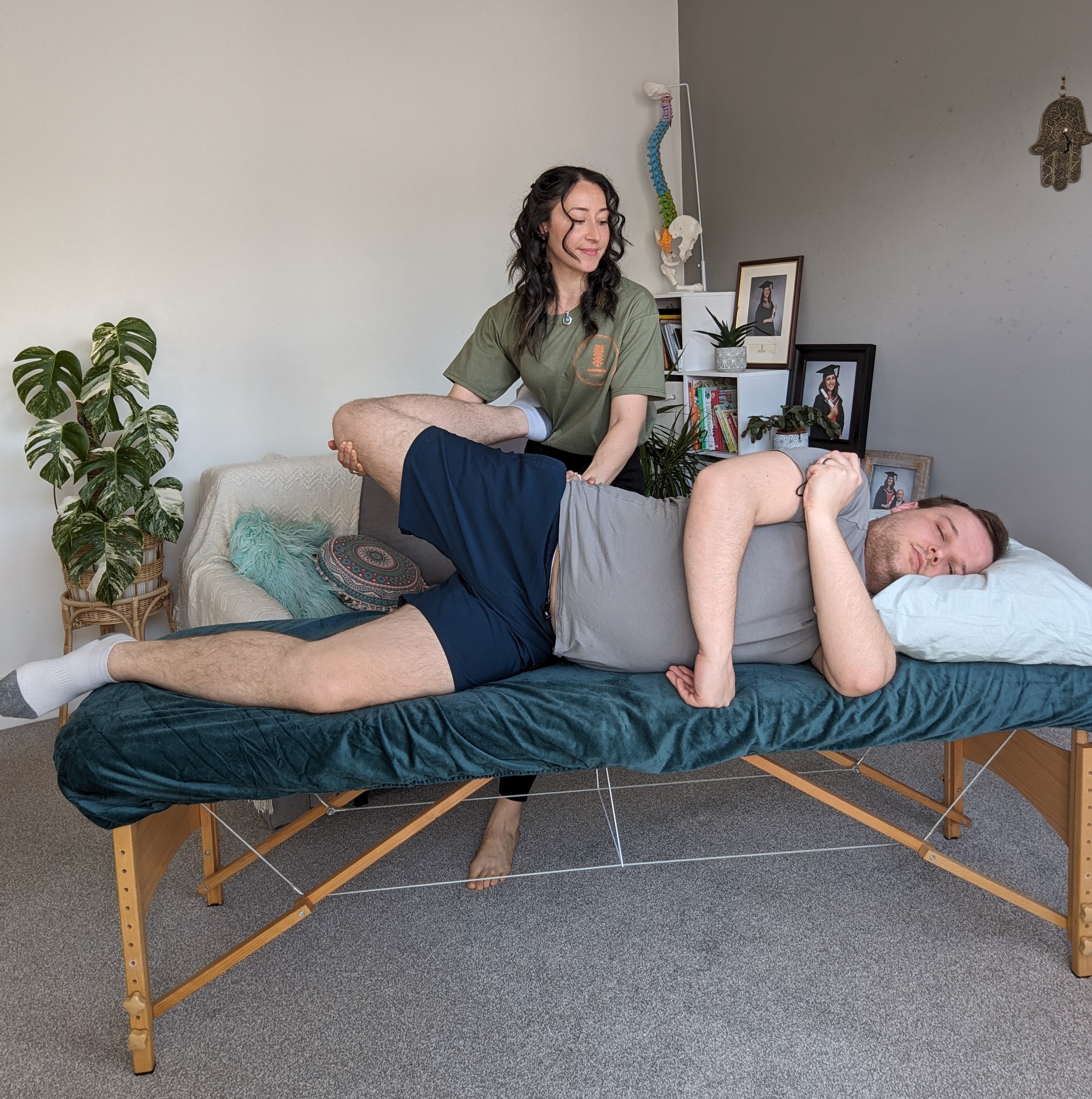
Osteopathy for sciatica and leg pain in Runcorn
We understand how much pain or discomfort can disrupt your daily life, and we’re here to help you move forward. By listening to your concerns and tailoring a treatment plan to your needs, our team is dedicated to improving your comfort, mobility, and overall quality of life. At A1 Bodyworks Clinic, your wellbeing is always our priority.


